What actually makes a bed orthopaedic?
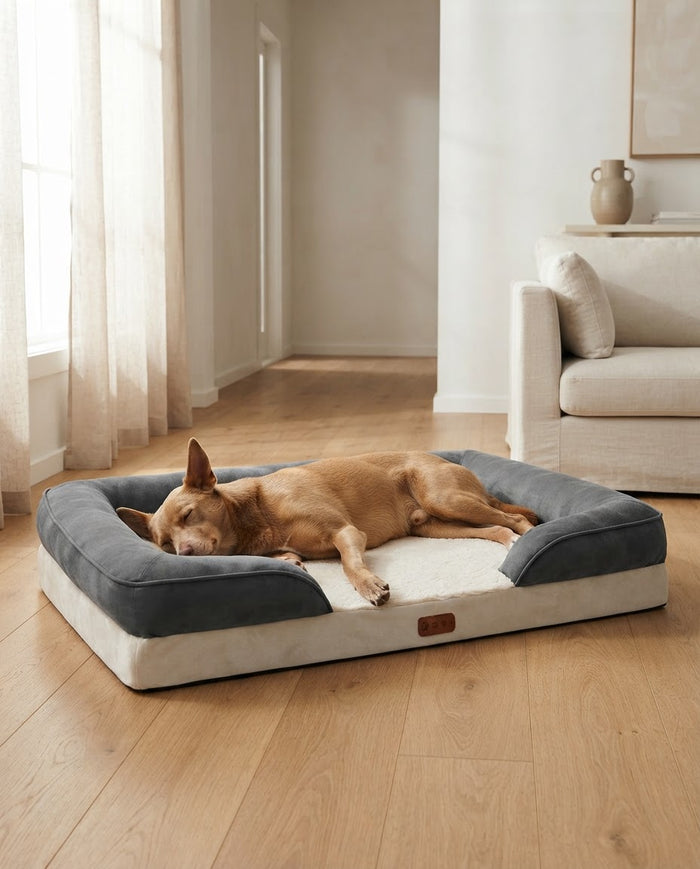
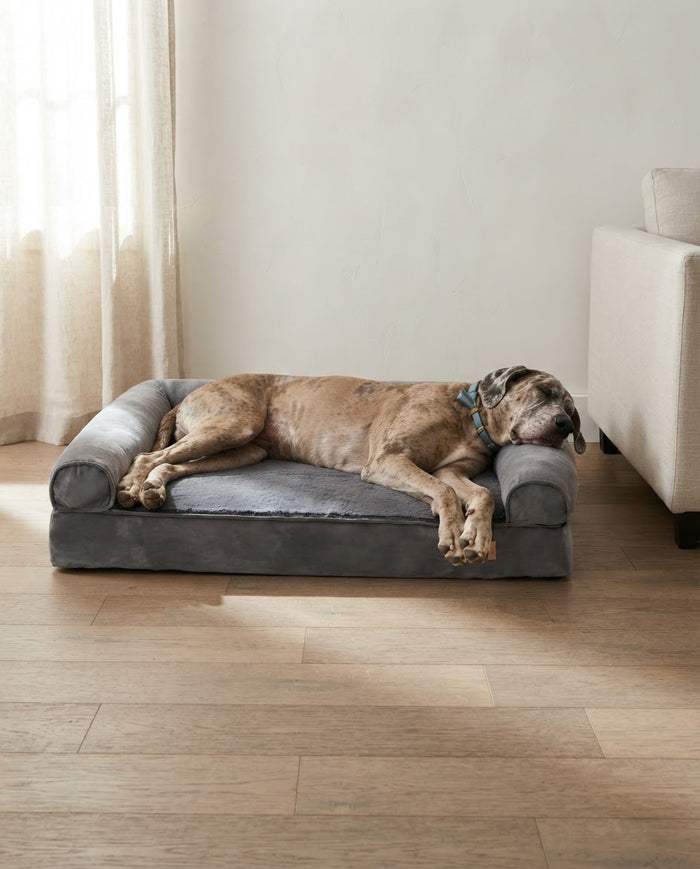
A supportive foam base rather than loose filling. Foam that returns to shape when your dog gets up, deep enough that a hip or shoulder does not press through to the floor underneath. Loose polyester fill feels soft in the shop and stops supporting anything within weeks — it migrates to the edges and leaves a hollow exactly where the weight goes. The word itself is not regulated, so anyone can print it on a bag of stuffing.
How do I know the foam will not flatten?
Foam density is the number that predicts it, and it is the one most stores never publish. We are collecting verified density figures with test reports from our manufacturers and will publish them per bed as they land. Until a figure is evidenced we will not print it — an unsupported number is worth less than an honest gap.
Can I wash the cover?
Every dog bed on this site has a cover that comes off completely. That is deliberate: a bed you can re-cover is a bed that can be cleaned properly and kept longer. Wash instructions vary by manufacturer and we publish them per product as we confirm them. Where it is not yet listed, email us and we will check before you order rather than guess.
How do I measure my dog?
Wait until your dog is lying stretched out on their side, then measure from the nose to the base of the tail — the base, not the tip. Add 15cm if they curl up to sleep, 30cm if they sprawl. Measure across the shoulders and add about 15cm as well. Our size guide explains why that method matters, and why a measurement taken for another store may not transfer to ours.
I am between two sizes. Up or down?
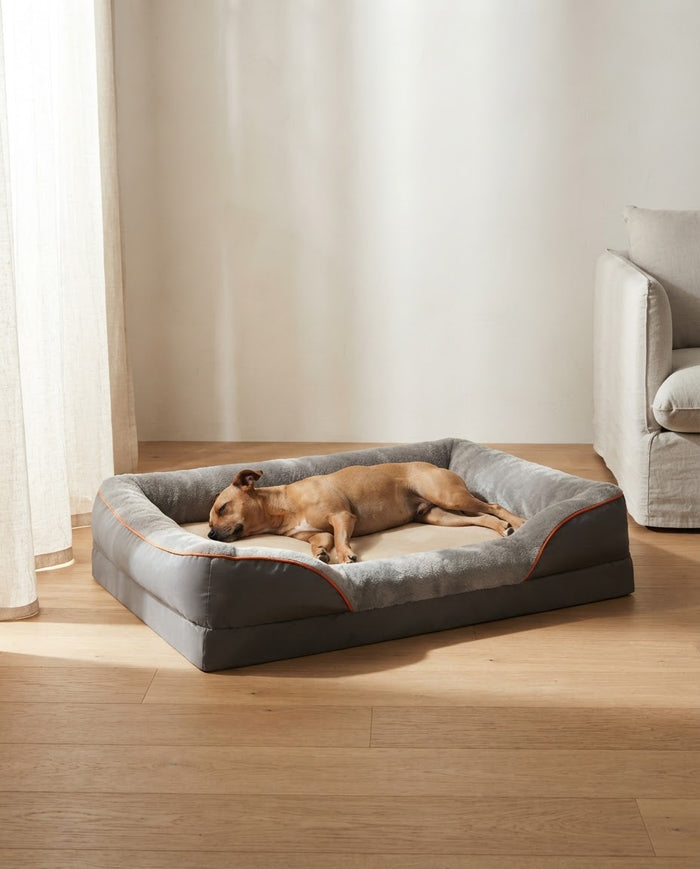
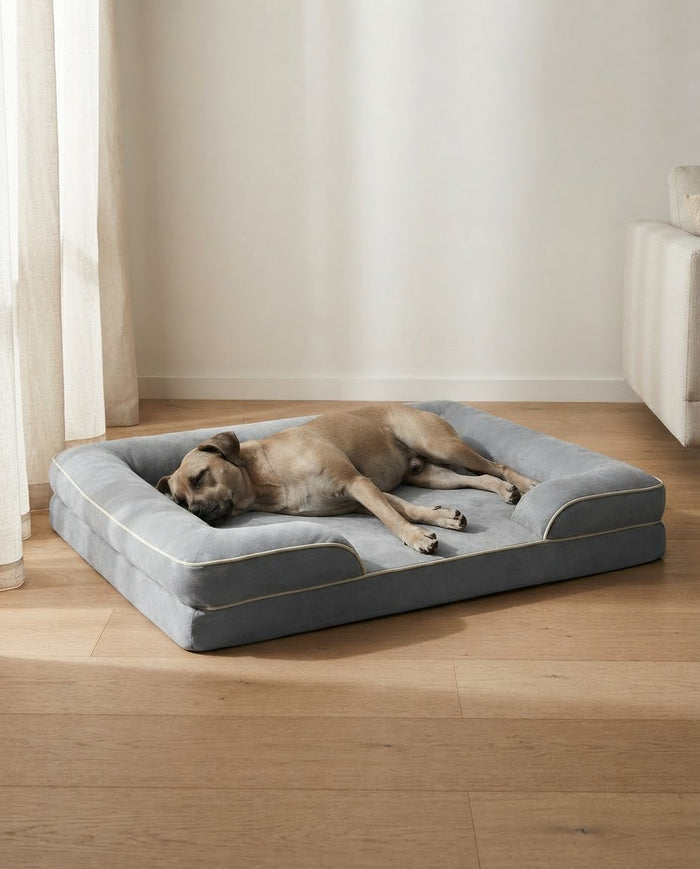
On a flat mattress, size up — there is no rim to make the larger bed feel oversized in the room. On a bolster or sofa bed, look at how deep the rim is: the jump in external size is often larger than the jump in usable space, so if the rim is substantial, size up. If you are unsure, email us your measurement and we will tell you which one to take.
Which shape suits a dog with stiff hips?
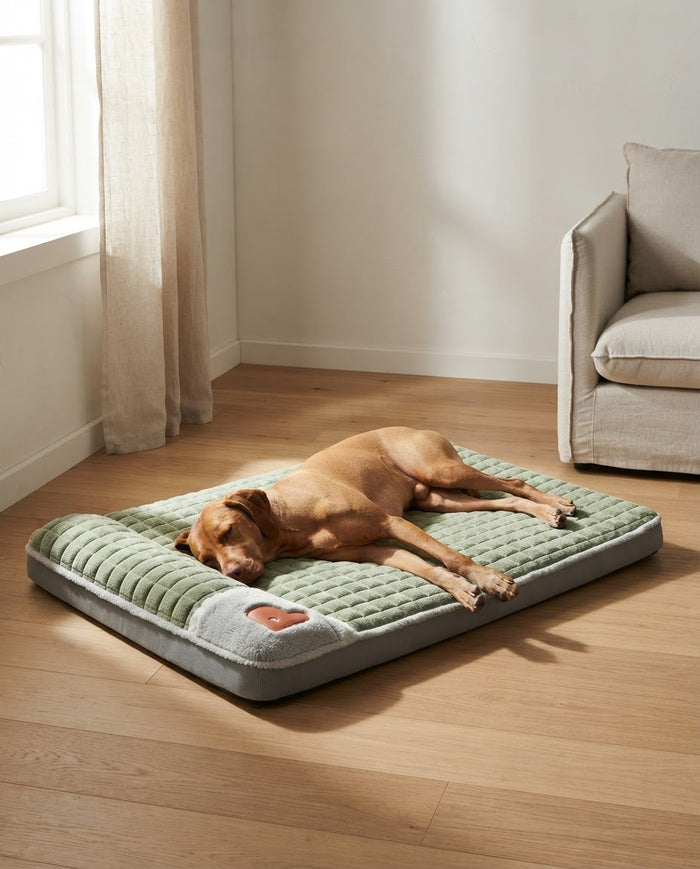
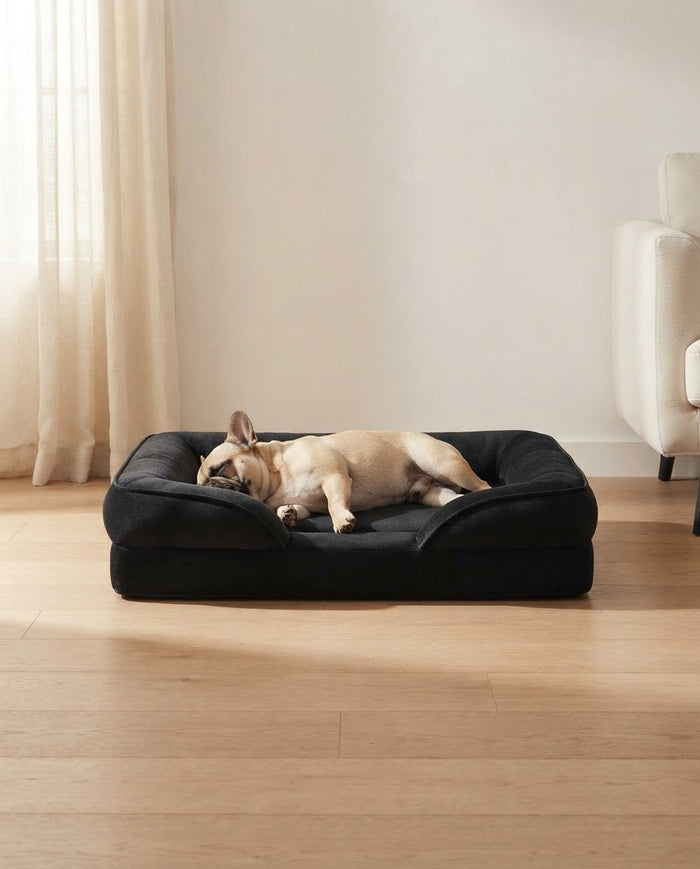
Look at the front entry height before anything else. A deep-walled bed asks a dog to lift a leg over a rim every time, which is the movement that hurts. A flat mattress or a low-fronted sofa bed lets them step in instead. The Loft runs 17cm high across every size for exactly this reason.
Will it help my older dog?
We are not going to tell you a bed treats anything — that is a question for your vet, and any store that answers it differently is overreaching. What a supportive base does is keep your dog off a hard floor and stop them sinking through to it, and a low front means they are not climbing in and out several times a day. Those are the two reasons owners of stiff and elderly dogs buy these beds.
Will one of these fit in a crate?
A flat mattress is the shape to look at. With no rim and no raised back there is nothing to work around, so it drops into a crate, under a desk or alongside a bed. Measure the internal floor of the crate rather than its external dimensions, because the frame takes up more room than you would expect.
Are the cat beds orthopaedic too?
No, and we do not describe them that way. The felt tunnel, the acrylic capsule, the mesh hammock and the round padded bed are built for warmth, height, airflow and enclosure — not for joint support. Calling them orthopaedic would be a claim we cannot back, so we do not make it.
What if it does not fit?
Your rights under the Australian Consumer Law apply to every order and cannot be excluded: a refund or replacement for a major failure, and repair or replacement where goods are not of acceptable quality. Our change-of-mind terms are being finalised and will be published in full. If you are ordering before then, email us first and we will confirm them in writing. Better still, send us your dog's measurement beforehand — a bed that fits is the outcome everyone wants.
My dog chews their bedding. Will these survive?
None of these beds are chew-proof and we will not sell them as if they were. A determined chewer will get through a fabric cover, and a foam base is not something you want a dog eating. If your dog destroys bedding, a raised mesh bed or a chew-resistant product from a specialist is a better fit than anything we stock.
How much is shipping, and how long does it take?
Shipping is $29.95 on orders under $200, $19.95 from $200 to $299.99, and free from $300. We ship anywhere in Australia, including regional and remote addresses. Orders are processed in 1 to 3 business days, and delivery is 12 to 30 business days from dispatch — our beds are made and sent directly by our manufacturing partners overseas. We would rather quote a wide window and meet it than quote a narrow one and miss it.
What if the bed is not right when it arrives?
You have 30 days from delivery to send it back if you change your mind, provided it is unused, clean and in its original packaging — you cover the return freight, which for a bed this bulky is usually $25 to $60. If it arrives faulty, damaged, or is not what you ordered, that is a different matter entirely and we cover everything, including freight both ways. Your rights under the Australian Consumer Law cannot be excluded, whatever this or any other page says.